



How are you planning ahead to deliver on higher demand?
When demand rises, most merchants reach for more trucks. The smarter move might be looking at the capacity already sitting in the yard.
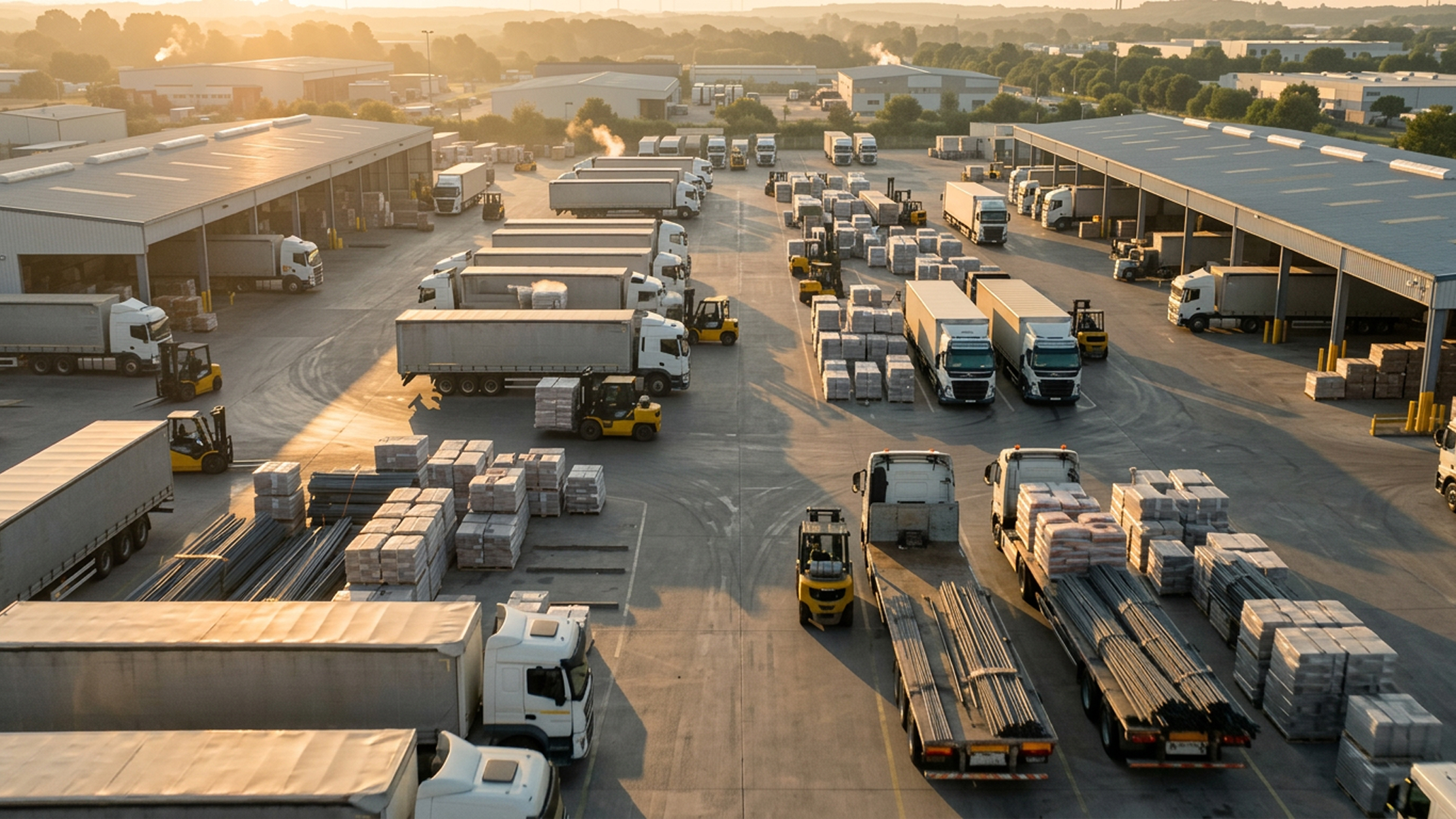
The next growth cycle will come. When demand picks up, most companies will prepare the way they always have. More trucks, more drivers, more depots. It's the obvious move. It may also be the wrong one, because a lot of the capacity you'll need is already sitting in the yard.
So before you buy, it's worth asking a different question. How much of that higher demand could you already handle with what you have?
You'd never extend a warehouse without checking how full the current one is. Yet fleets get bigger all the time with no real picture of how the current one is used. Look at a normal day and you'll usually find half-empty vehicles leaving the yard, and last-minute orders sent out alone when a planned route was already going that way. The capacity is there. It just isn't being used.
Give two merchants or rental companies the same fleet, the same planners and the same customers, and one will still deliver more. You see why at half past one, when a customer needs a delivery tomorrow. Can it join a route that's already running? Is there a truck nearby with room? Could a haulier do it cheaper than your own fleet? With the answers in front of you, you say yes. Without them, you turn down good work, or take it and break the day. The only real difference between the two? One is using data and AI to make those calls.
The size of that gap is easy to miss. Most fleets run at 65 to 70% of what they could carry. The best reach 85%.
It changes the economics of growth. When demand rises, one merchant buys another truck. The other finds the room inside the trucks it already runs. Both grow. One ties up far less capital to do it.
And it's where the whole trade is heading. For a long time, growth meant adding resources, because information moved slower than goods. That's flipped. Information moves instantly now. The materials still can't. The advantage is shifting from who owns the most to who runs it best.
So the real question isn't how many trucks you'll need when demand returns. It's how much of today's capacity you can already see.

